
The rattle of dice in a cup has reverberated in the history of mankind thousands of years. Ever since ancient Mesopotamian temples, to the contemporary internet casinos, these little cubes of high stakes have entralled gamblers in all civilizations. What most players are unaware of is that the computerized dice games they play nowadays are direct forebears of gambling traditions which are thousands of years old.
The games of ancient dice were not only entertainment, but the foundation of the gambling culture of the modern world. The rules, betting systems, and the concept of probabilities invented by our ancestors have still remained in the rules of operation of online casinos to date. We can look at the development of these ancient games of luck to become the high-tech digital experiences that we experience today.
The Origins of Dice Gaming in Ancient Civilizations
Dice are seen to have been rolling over 5,000 years since archaeological evidence was discovered of such activity. Dice were first made in the early days of Mesopotamia, Egypt and the Indus Valley, and they were made of wood, stone, and clay and bone. These were not mere gaming devices, but a strong part of the culture.
Dice were used in various ways other than entertainment by the ancient civilization. They were used as divination tools to assist priests and rulers to make pivotal decisions. They also played the key role in the social gatherings and the gambling became a common pastime among all classes.
The proliferation of dice games along old trade routes through the ancient trade routes developed a common gambling culture. Merchants and travelers transported these games with them as they passed between civilizations and changed the rules and invented new variations. This interchange between cultures formed the basis of standardized casino games that we know of today.
These ancient traditions live on in modern digital platforms—beispielsweise können deutschsprachige Spieler nach der Registrierung und dem anmeldenim Spinoli Online-Casino (auch bekannt als Spin Oli oder Spinoli Casino) nach dem einloggen genau jene Würfelspiele erleben, die ihre Wurzeln in diesen jahrtausendealten Traditionen haben.
Hazard: The Medieval Game That Birthed Craps
The phenomenon of hazard appeared in the 12 th century in medieval England and immediately became popular among knights and nobles. One player (the “caster” in the game) was also required to choose a number of between five and nine as one of their main and roll dice to get a particular mixture. Others would gamble on the result and this would produce the community gambling experience that characterized the game.
The Hazard mechanics were complicated, and it is possible to win or lose based on the primary roll and the subsequent rolls. The game became popular all over Europe and became later to cross to America, despite its complexity. Throughout this time, it had both developed into the smooth form of Craps.
Contemporary web junk Craps has the indispensable DNA of Hazard. The pass, the don’t pass bets, the come-out roll and the point system could all be directly traced to medieval England. The casinos have merely computerized these centuries old mechanisms and made them available to millions of players globally.
Today, online casino platforms like StakeMania Casino and preserve these historic gameplay elements while adding modern features that enhance the medieval gaming experience for contemporary players.
Dice Games in Ancient Rome: Tesserae and Tali
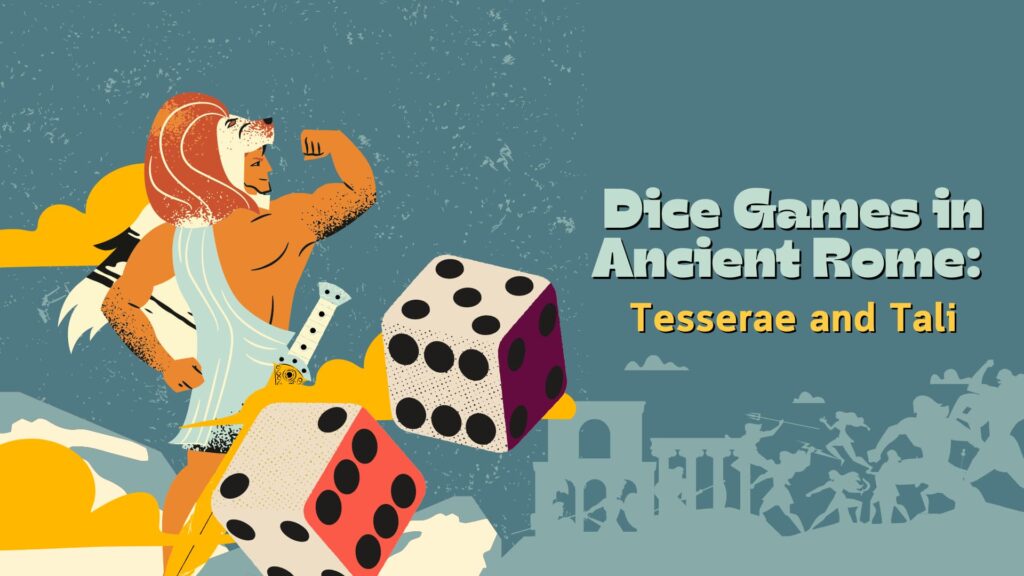
Romans were ardent gamblers, even though there were many laws trying to limit dice games to some of the festivals. The six-sided dice were called tesserae which almost resembled modern dice, but were very common in Roman society. A different gaming experience is provided by Tali, which is composed of knucklebones of sheep or goats, and has irregular shape and four possible landing sides.
The Roman dice games made a number of major contributions to modern day gambling:
- Betting pools: Betting on individual rolls by more than one player.
- House rules: Fair play standard regulations.
- Social gambling places: Special places such as taverns and bathhouses to gamble.
Romans had a reflexive view of probability, and they had betting systems, which operated on the probability of occurrence of some events. They knew that there were more combinations that are less common than others and bets accordingly. This basic knowledge of odds is the essence of all casino games in the present day.
Museums like the British Museum house extensive collections of ancient dice and gaming artifacts, offering fascinating insights into how these games were played throughout history.
The dice have been excavated in archaeological digs in almost all Roman settlements, whether the camps or the luxurious villas. This wide usage indicates that gambling became a significant part of Roman culture which is why today we have an international casino industry.
From Physical to Digital: How Ancient Mechanics Shaped Online Gaming
The problem that needed to be resolved when moving the physical dice to digital games was to come up with the real randomness. Random Number Generators (RNG) are the digital counterpart to the rolled dice, on which we use complex algorithms to make each result unpredictable. Such systems should be as fair as the ancient gamblers required several thousand years ago.
Online casinos have managed to maintain the mechanics of the old games and improve the experience of the players. The fundamental format of dice games has not changed as players continue to place bets on the result of the dice roll, await the outcome, and reward winnings according to a set of prearranged odds. The difference is that it is faster, more accessible and diverse in terms of the types of betting.
The designers of modern games need to learn historical dice games to know what makes them interesting. The important aspects that lend themselves to the digital platform are:
- Not complex, easy-to-follow rules, which can be learned by beginners.
- Various betting products that suit various levels of risk aversion.
- Intense gameplay that keeps the person on the edge of their seat.
- Social aspects which replicate the communal gambling practices.
Live dealer games are the newest development that integrates the convenience of the digital world with human touch. The players can see real dice rolled in real time using high definition video streams, which replicate the feel and social atmosphere of an ancient gaming hall. This is a novelty that connects both the ancient tradition and modern technology.
The Psychology of Dice: Why These Ancient Games Still Captivate Us
The popularity of dice games is intertemporal as they exploit the primitive human psychology. The aspect of sheer luck places a level ground where anyone can be in luck no matter how skilled and experienced they are. This aspect of democracy resulted in the popularity of dice games in the ancient world and to this day captures players.
Risk/reward psychology is important in the long-term popularity of dice gambling. As a result of an immediate feedback of a roll of a dice, the brain produces dopamine, which creates excitement and anticipation. The same neurological responses that are present in the minds of online casino players in accessing the roll button are what the ancient Romans felt when they were clicking the roll button.
The contemporary web sites have further amplified the social aspects that resulted in the ancient dice games being a social activity. The chat features and the leaderboards replicate the friendship of Roman drinking kinds and medieval video game bars. The communities may be formed around these ancient games where players share their wins and reminisce about their losses.
Due to the simplicity of the dice games, the games are accessible to both generations and cultures. Dice do not need special knowledge or practice as opposed to complex card games or strategy games. This is the universal appeal as identified by ancient civilizations and this is the reason why dice games continue being part of online casinos all over the world.
Conclusion
The invention of dice games in the ancient world developed structures and theories that are still used in the online casinos today. The essence of dice has not changed since Mesopotamian temples to medieval castles to online sites, and that is the excitement of luck, the possibility of luck, and the fun of the game. Online casinos did not turn anything new into reality; it is the traditional customs that humanity has enjoyed for five thousand years that are transformed into the digital form.
The future of the dicing game is probably the implementation of virtual reality and new technological inventions. But the basic mechanics will still be based on ancient knowledge on probability, fairness and entertainment. The bottom line is, roll dice in ancient Rome or press a button in a computerized casino on the world wide web, human beings are engaging in the same age old game with chance.