
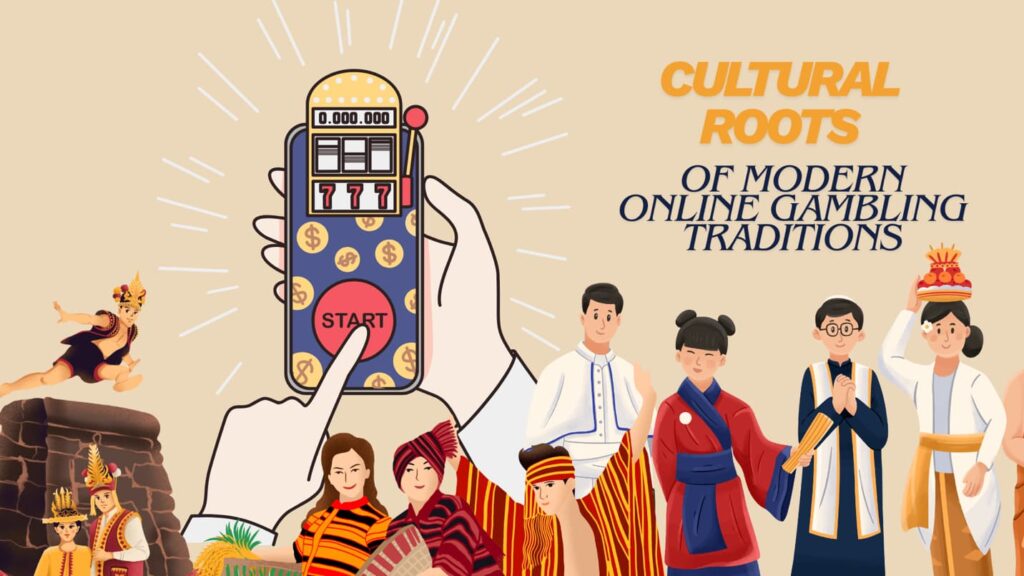
The digital age has transformed how millions of people engage with gambling, bringing casinos and betting platforms directly to our fingertips. Yet beneath the sleek interfaces and instant payouts lies something far more ancient. Modern online gambling is not a revolutionary invention but rather the latest chapter in humanity’s millennia-old relationship with games of chance, carrying forward cultural traditions that stretch back to the earliest civilizations.
Ancient Origins: Gambling Across Civilizations
The story of gambling begins long before the internet, before electricity, and even before written history. Archaeological excavations have uncovered dice-like objects in Mesopotamian tombs dating back to 3000 BCE, suggesting that our ancestors were rolling the bones when the pyramids were still under construction.
Early Dice Games in Mesopotamia and Egypt
Ancient civilizations didn’t view gambling as mere entertainment. In Egypt and Mesopotamia, games of chance were intertwined with religious ceremonies and divination practices. Priests would cast lots to interpret the will of the gods, believing that randomness revealed divine intentions.
These early gambling implements were crafted from materials considered sacred: animal bones, precious stones, and carved wood. The act of gambling itself was seen as a conversation with fate, a tradition that echoes in the superstitions many online gamblers maintain today.
Asian Gambling Traditions
China’s relationship with gambling extends back thousands of years, deeply rooted in philosophical concepts of balance and fortune. The Chinese invented games that required both skill and luck, reflecting their belief in the interplay between human action and cosmic forces. Keno, now a popular online lottery game, originated in ancient China and was allegedly used to fund the construction of the Great Wall.
Mahjong emerged during the Qing Dynasty and became more than just a game—it became a social institution. The clicking of tiles and the strategic gameplay created bonds between players that transcended mere competition. Today, digital versions of Mahjong preserve these cultural connections while reaching global audiences.
European Gaming Houses and Their Legacy
Romans were notorious gamblers, with even Emperor Augustus known to enjoy dice games. Despite periodic bans by various emperors, gambling remained woven into the social fabric of Roman life. Medieval Europeans continued this tradition, with card games spreading across the continent by the 14th century.
The first true casino, the Ridotto, opened in Venice in 1638 to provide controlled gambling during carnival season. This Italian innovation established the blueprint for modern gambling establishments and, by extension, the organized online casinos we see today.
Cultural Rituals and Superstitions in Gambling
Walk into any casino—physical or virtual—and you’ll witness ancient beliefs manifesting in modern behavior. These rituals persist because they connect contemporary gamblers to something deeper than mere probability.
Lucky Charms and Symbols
Different cultures have carried their symbolic traditions into the digital realm:
- Chinese culture: The number eight is considered supremely lucky (its pronunciation resembles the word for prosperity), while four is avoided as it sounds like “death”
- Western traditions: Four-leaf clovers, horseshoes, and the number seven appear frequently in online slot themes
- Indian beliefs: Playing during auspicious times determined by astrology remains common among online gamblers celebrating Diwali
Online platforms have cleverly incorporated these cultural elements into their designs. Asian-focused gambling sites often feature red and gold color schemes, dragons, and prosperity symbols that resonate with traditional beliefs.
Ritualistic Behaviors
Many online gamblers perform specific actions before placing bets, from wearing lucky clothing to clicking buttons in particular sequences. These behaviors mirror ancient practices where gamblers would pray to deities or perform specific gestures before casting lots. The digital environment hasn’t eliminated these rituals; it has simply relocated them from temple courtyards and gaming houses to computer screens and smartphone apps.
Social and Community Aspects
Gambling has always been a communal activity, bringing people together in shared experiences of risk and reward. This social dimension is perhaps the most powerful cultural tradition carried into the online world.
Gambling as Social Bonding
Traditional societies used gambling to strengthen community ties. Native American tribes incorporated games of chance into tribal gatherings. European villages hosted card games in taverns where locals would socialize over bets.
Online platforms have worked to recreate this social atmosphere. Live dealer games stream real croupiers into players’ homes, complete with chat functions that allow interaction. Multiplayer poker rooms buzz with conversation, trash talk, and camaraderie—echoing the atmosphere of smoke-filled backroom games throughout history.
Festive and Celebratory Gambling
Certain cultures have always associated specific holidays with gambling traditions. During Chinese New Year, families gather to play mahjong and card games, viewing gambling as a way to invite prosperity for the coming year. Diwali in India sees increased gambling activity, as the festival celebrates Lakshmi, the goddess of wealth.
Online gambling sites experience predictable surges during these cultural celebrations. Platforms now offer special promotions and themed games aligned with various cultural festivals, acknowledging and preserving these traditions in digital form.
The Transition from Physical to Digital
The move online represented more than technological advancement—it required translating cultural experiences into code and pixels.
Preserving Cultural Elements Online
Successful online gambling platforms don’t simply digitize games; they adapt them culturally. Sites targeting different regions offer localized payment methods, customer service in native languages, and games that reflect regional preferences. A platform serving Japanese players might emphasize pachinko-style games, while one focused on Latin America might highlight lottery-style offerings popular in that region.
The visual design often incorporates cultural aesthetics that make players feel at home. Sound effects, music, and even the pace of gameplay are adjusted to match cultural expectations and traditional gaming experiences.
New Traditions Born from Technology
Interestingly, the online environment has spawned its own emerging traditions. Streaming gambling sessions on platforms like Twitch has created new community rituals. Players develop loyalty to specific online platforms, much like gamblers once had “their table” at physical casinos. Virtual reality gambling, still in its infancy, promises to blend cultural traditions with cutting-edge technology in unprecedented ways.
Regional Variations in Modern Online Gambling
Despite globalization, regional preferences remain strong in online gambling.
Western Traditions
Las Vegas established itself as a cultural icon, and its influence permeates online gambling worldwide. The glitz, the promise of transformation, and the “Vegas-style” slot machine have become globally recognized. European betting traditions, particularly sports betting and regulated gaming, have shaped how online gambling operates with an emphasis on responsible gaming frameworks.
Eastern Influences
Asian markets have profoundly influenced online gambling globally. Baccarat, traditionally popular in Asia, now dominates many online casinos worldwide. The Chinese concept of “high roller” culture has been adopted internationally. Games like Sic Bo and Dragon Tiger have migrated from Asian gaming floors to global online platforms, carrying their cultural contexts with them.
Conclusion
As we click “spin” or “deal” on our devices, we participate in a tradition as old as civilization itself. Online gambling hasn’t invented new human desires—it has simply provided new channels for ancient impulses to find expression. The cultural roots run deep: from Mesopotamian divination to Chinese philosophy, from Roman dice games to Venetian casinos, each tradition has contributed threads to the tapestry of modern online gambling.
Technology may change the medium, but the essential human attraction to games of chance—and the cultural meanings we attach to them—remains remarkably constant across millennia. In this sense, every online bet is an echo of countless bets placed throughout human history, connecting us to our ancestors in their eternal dance with fortune.